
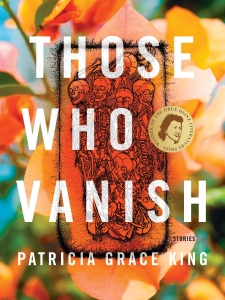
Those Who Vanish by Patricia Grace King (Fiction ’13)
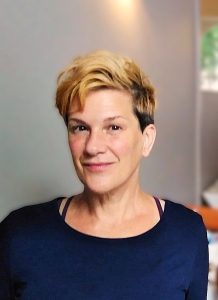
Fiction alum Patricia Grace King has a new story collection, Those Who Vanish, winner of the 2026 Drue Heinz Literature Prize, out from University of Pittsburgh Press. Read an excerpt below.
Rubia
There are some who say we shouldn’t have gone in the first place, that we had no business in Guatemala in the middle of its civil war. In the late 1980s and 90s, gringos in the country must’ve numbered in the thousands or more. And what were we doing? Why had we come? These are questions worth pondering.
When I was twenty-three, though, you couldn’t have torn me away. I was stupid or headstrong or possibly both, and also madly in love. In love, I mean, with a man—I’ll get to that—but also in love with the country. With who I could be living there.
Guatemala in its last decade of war could act on you like a magnet. If you belonged to a type—by which I mean young, North American, most likely white, idealistic, with time and money to burn—right and wrong seemed so clearly defined. This was bracing. Also, objectively, Guatemala was gorgeous; many parts of it are. On the mixtape you’d brought from home, Mark Knopfler could wistfully sing, “These mist-covered mountains are home now to me,” and if you happened to be in the Cuchumatanes, watching those crags and slopes lose themselves in low-hanging clouds of an evening, you’d know he was singing about this very place where you stood.
As for those who went to put themselves deliberately in harm’s way—to accompany a town under military attack, or to walk with returning war refugees—the motivations surely were different. My own plans included nothing so philanthropic. I went to Guatemala to live because I liked myself better in this other country than in my country of birth.
I’d grown up at the bottom-ass edge of Delmarva, a landscape of crab shacks and chicken farms where the only thing flat as the Chesapeake Bay in your face were the swamps at your back. Ever since my daddy ran off when I was so little I cannot recall, I’d lived with my mama and my aunt Nancy, in a two-room apartment above my aunt’s beauty shop. “Oh my blessed,” Aunt Nancy said on a regular basis. It was blés-sed: two syllables, always. “You act, Josephine Brindle, like you’ve got no raisings in you.”
She tried forcing them into me, though, she and Mama alike, with their blow driers and flat irons and I don’t know what other beauty-shop implements. Just get this girl’s hair to behave—you could hear them both think—and the rest, please Jesus, will follow. My hair was so curly it kinked, so blond that when I came home from fourth grade and asked what albino meant, Mama snapped, “You’re not one!” Then she combed out my curls, from roots to ends, till they looked like white cotton candy.
I’d wanted to get out from under Aunt Nancy and Mama’s four feet ever since junior high—when, to hear either one tell it, I’d launched my career of embarrassing them. When they heard I had joined the boys’ soccer team (girls’ sports weren’t a thing at my school), my mother and Aunt Nancy cried. Then Mama sat me down in one of my aunt’s barber chairs and commenced brushing my hair.
“If your daddy could see how you carry on, Josie, he’d tan your hide,” she said, snuffling, though I doubted my daddy could’ve picked me out of a line-up of preteen girls by that point. “Your daddy knew what was what. He liked to tell women from men.” Mama believed this important. She still dolled herself up—feathered hair and pink lipstick, five days a week—to be a receptionist at Purdue Farms.
“He sounds like a jackass,” I said, and she cracked me on the head with her brush.
I didn’t drop out of the boys’ soccer team, though. I could slide-tackle without getting red-carded, could run without tiring for a whole game. From twelve to eighteen I played soccer, the only girl on the team, and in the meantime I had zero boyfriends. Not even a date
for the frigging prom, and if you’d asked did that bother me, I might’ve bit off your head. Sweet sixteen and never been kissed, much less loved: that was me, and it seemed likely I’d someday be thirty-five, ditto, ditto.
Then I got a full ride to college, where I acquired new skills: to roll my own cigarettes, to insert a diaphragm in one minute flat, and to let my hair dread, which it seemed my hair wanted to do all along. In ways great and small, life changed during college, but never more so than my junior-year semester abroad, when I saw Guatemala for the first time. And Guatemala, you might say, saw me.