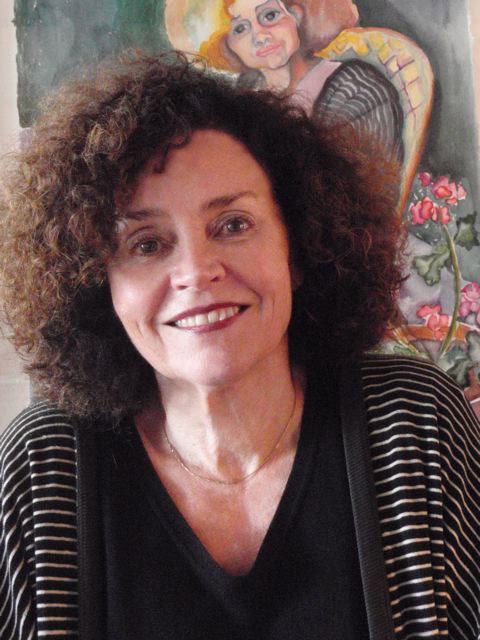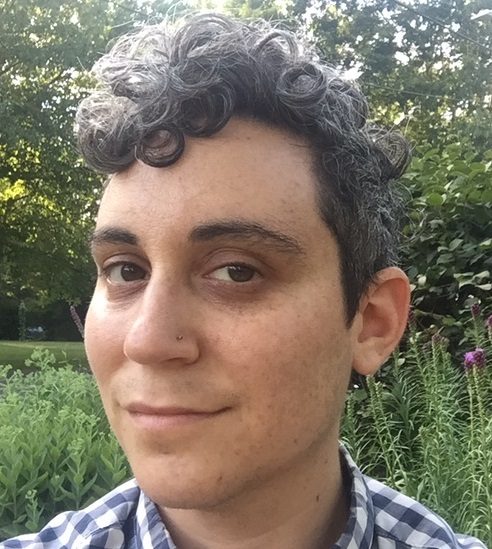

The Rupture,” an essay by fiction alum Peggy Shinner, was recently featured in the Ocean State Review. Read an excerpt below:
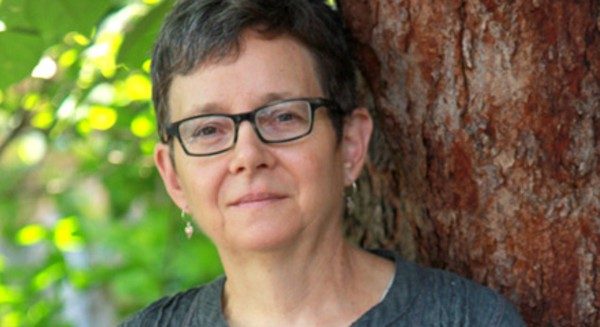
The Rupture

I have long bristled at the suggestion that writing is therapy, and have secretly and now not so secretly, distanced myself from that notion. Writing is work, or the attempt to make work into literature, while therapy is the attempt to banish unhappiness, or at least understand it.  Writing, in fact, can be a lifelong commitment to unhappiness, or to quote Philip Roth, writing is frustration…not to mention humiliation. Charles D’Ambrosio, when asked about confessional writing, held it accountable to the demands of language…. [T]he truth of writinginevitably takes you away from the merely heartfelt….In a way, writing maps a path out of the self

When my computer was stolen fifteen months ago, along with my back-up hard drive and flash drive—the hard drive was plugged into my computer which was slipped into my backpack sitting on the floor next to my desk (to make for easy transport), and the flash drive was, incidentally, in the backpack—the book I’d been working on was gone. In the days that followed, well-meaning friends, acquaintances, and strangers asked me if I was going to write about it or urged me to. A few dispensed with any hint of suggestion and went straight to the imperative: Write about it! One individual, getting swept up in the drama, said the theft was now part of the story, of what happens to the thief when s/he reads your manuscript… All this sounded almost gleeful, as if a great opportunity awaited me; as if horror would eventually transmute to something like pleasure; as if, delving into the well-known trough/trope of loss and despair, I’d come up with the requisite saving insights, and have a new project to boot.

I did not write about it.  I had no desire to write about it. What happened to me and Ann was commonplace and uninteresting. (Ann’s computer was stolen too, but her hard drive, not plugged in, was left behind. Therefore, she had back-ups of all her work.) What could be said about it that, despairingly and maudlinly, hadn’t been said before?  Why me? somebody might have cried.  Why not? Ann and I retorted when it was our turn. Perhaps more to the point, I didn’t want to be confined to a narrative of trauma. In that narrative, there’s pain, defiance, redemption; or there’s pain, and more pain. My on-going project had been of a different order. I’d wanted to shed the self, or set it aside, so that it became, as D’Ambrosio put it, an angle of vision, a complicating factor, almost impersonal. You must be so angry, friends said.  But I wasn’t angry. Somehow my mental processes by-passed the perpetrators, towards whom I might have felt angry, and I hardly thought of them.  Instead I was irrationally angry at everyone else. I was angry at Ann, who was suffering but to a lesser extent. The book I’d been working on was gone. 

People were, all at once, generous, comforting, off-key, and slyly castigating. Soup in particular was the universal cure-all delivered to our door.  Squash soup, potato soup, tomato. Bucatini all’Amatriciana, zucchini bread, brownies, flowers, wine.  There were tips for moving forward: [S]it down and do an outline from what you remember while it’s still fresh….you can fill it in later as you think of things.  Read the introduction to William Gass’s “Omensetter’s Luck”… in which he describes how his first novel, which he worked on for nearly a decade, was stolen by a colleague and sold to a publisher under the colleague’s name.  My dear friend, xxxx, who died this year, wrote a book on secrets. If you’d like to know of it, let me know.  Begin again, whatever that means—and looking back: We SHOULD remember to print out our story/novel every day or so. Even though we’d have to retype it all again into our computer—if our work was stolen—at the least we’d still possess our months and years of creativity in hard copy. More than once I was reminded of Maxine Hong Kingston, who’d lost a book manuscript in a fire; Amy Tan, who allegedly experienced the same, only I suspect the consoler was confusing Tan with Kingston, both Chinese-Americans; Nabokov, who would write a novel and then put it in a safe, and write it again without referring to what he had

How can I help? my mentor asked from many states away. Time to glean

I knew what glean meant but what did he mean? Glean, to gather or pick up ears of corn that have been left by the reapers.  [H]ow much has yet to be gleaned off this stony field. You’ll get through this hard time, he’d once said years ago, as we walked on the edge of a prairie—a hard time about which I have no lasting memory—and then there will be another, he added, and in that moment, with the goldenrod turning to seed and the wind cutting our faces, I saw that time would be relentless and also that it would pass.

Read the essay in its entirety here: https://oceanstatereview.org/2021/04/10/peggy-shinner-the-rupture/

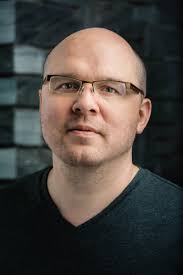
Love Languages,” a poem by 2019 alum Nicole Chvatal, was recently featured in Deep Overstock. Read an excerpt below:


Love Languages

My mom’s is easy: She tells me I look pretty.

My lipstick’s love for me runs so deep I ingest a pound per year.

My brother drives a stick shift and brings me lobster 
he caught earlier. He soaks the clams for an extra hour 
to clean out any excess grit.

Dorner handwrites letters and her texts include 

the emojis I forget about: Peacock, air mail, fleur-de-lis.

My favorite jeans hold me in shape of me.

Read the poem in its entirety here: https://deepoverstock.com/2021/04/01/love-languages-nicole-chvatal/

Poetry faculty member Matthew Olzmann was recently featured in The Rumpus. Read an excerpt of “Like a Dish Rag Soaked in Bleach” below:

Like a Dish Rag Soaked in Bleach

this new pandemic or the next
or maybe some unknown future
contagion might comprehensively scrub
any of us from the Earth, the way
the waitress, comprehensively, wipes down
the diner’s counter two seats from me,
sprays the surface with Lysol, then
wipes everything away again. Spotless.

It’s late February in the first Year of the Virus.
In a month this place will be closed, and then next
it will no longer exist. But for now,
the experts say, Wash your hands; all will be fine.

So, if you should, coughing just once
into the concern of your elbow,
sit near me at this counter, then look up
to say, “What’s good?” I’ll say

the coffee is so good and also the cheeseburger
and you must try the vanilla milkshake.
The onion rings: excellent.
The jalapeno poppers: exquisite.
And here’s the sports page which says a guy
just broke the world pole vaulting record

and that is also good.  I don’t want
to ignore peril. I’m not trying to distract
from the threat of plague, war, or famine. Fate,
like a meteor whistling toward us.
I’m just saying it’s good

to have lived, even briefly, in a time when one’s vocation,
one’s destiny could be the use of a pole
to vault over a different pole
which, for me, seems bizarre, though less bizarre

than other sports, such as, let’s say, bog snorkeling,
cheese rolling, or “eel pulling”
which was basically tug of war with a live eel
and popular in the Netherlands in the 1800s.

Read the poem in its entirety here: https://therumpus.net/2021/04/national-poetry-month-day-1-matthew-olzmann/

2006 poetry alum Beverly Bie Brahic was recently featured in The New Criterion. Read an excerpt of Brahic’s translation of “The solitary bird” below:

photo of Beverly Bie Brahic (poetry '06)

The solitary bird (a translation)

The solitary bird
by Giacomo Leopardi

From the top of the old tower,
Solitary bird, you go on singing
To the countryside until the day dies;
And your song drifts through the valley.
Spring everywhere
Shines in the air and exults in the fields,
And seeing it disarms the heart.
You hear flocks bleating, herds lowing;
Happy, the other birds play together,
Ceaselessly turning in the cloudless sky,
Celebrating this gladdest of seasons:
You sit apart, pensive, watching it all;
No companions, no flights,
No show of joy, you shun their games;
You sing, and singing spend
The year’s and your life’s finest flower.

Read the full translation, as well as another, at The New Criterion: https://newcriterion.com/issues/2021/4/the-solitary-bird-a-translation

2021 poetry graduate Dane Slutzky was recently featured in Zocalo Public Square. Read an excerpt of “Call to Adventure” below:

Call to Adventure

After the car accident I bought the game :: now when I close my eyes I see the cliff-sides and dense tree cover, the fog shrouded island and the shimmering lake :: I keep busy collecting ore, mining it so I can buy things, special carrots and outfits for every type of extreme temperature or weather event :: I barely remember sliding backwards across the highway :: I’m 100% there collecting mushrooms and insects and killing reanimated skeletons :: the music still in my head face down on the chiropractor’s table, swelling to its jaunty crescendo :: heat on my neck, my shoulders finally slumping down from what feels like their permanent position by my ears :: I’m thinking strategy, what fortress to attack next ::

Read the poem in its entirety here: https://www.zocalopublicsquare.org/2021/04/09/dane-slutzky-poem-call-to-adventure/chronicles/poetry/

Fiction faculty member C.J. Hribal was recently featured in the LEON Literary Review. Read an excerpt of “The Buzz Kill” below:

The Buzz Kill

 Get a grip, Porter Atwood tells himself. This is no time to be acting like a fool.     
       Then again, there’s no time like the present.
       Which is why he finds himself seated on a stool just down from Luther Krake and some other men over at the Y-Go-By. Porter, deep in his cups, nods to Luther, who’s well on his way, as Alvin Beyes sets him up again.
       “You’re getting married tomorrow, ainna?” Alvin asks Luther. Luther nods this is so. Luther’s nearly sixty. Alvin pours him a shot and pulls him a draft. “This one’s on me.”
        Porter’s known people like these men all his life. Men—some women, too, but mostly men—who can’t quite get a grip on their life until they’ve squeezed with the pads of their fingers the fluted wet coolness of a seven ounce glass of beer in the velvety half-dark of a tavern. The word itself, rhymes with cavern. No matter how bright the day, it’s always full shade in a tavern—twilight at mid-day, with electric lighting and the slight buzzing of those neon beer signs. Almost like a different kind of pulse.
       Men like Wally Czabek, seated two stools over, a decent man given to periodic failures of focus. Men for whom the world only makes sense here, in the company of other men given to similar failures and weaknesses, men who find a kind of sullen joy in each other’s company, comparing notes on the conspiracy outside. “The world’s a mess,” says Wally Czabek, who orders himself another brandy Old Fashioned with a beer chaser, as though that is somehow going to fix things. In here it’s okay. It’s okay, really. It’s fine. Outside it’s wrack and ruin, and if the sun weren’t such a blinding rectangle of light each time somebody opened the door to join them, they could even forget entirely that that other crazy world existed. And then something would remind them, a wife phoning them or an errand remembered, some destination that required you to get off your barstool, and they’d go home, carrying their unspoken heartache and longing like a disease. Until it was time for the next afternoon’s transfusion, the bolstering of meaning and courage and perseverance that could only be gotten here.
       It’s this bolstering Porter’s drawn to. He’s been out of sorts for the last two weeks, ever since that kid drowned in his subdivision. Can’t concentrate, keeps thinking about how that kid ended up pinned beneath some branches in that little creek—barely a creek, really—the water tumbling over him, a bunch of other boys standing around with rocks at their feet and defensive, guilty looks in their faces. No, the two didn’t have to be connected, only they probably were. And Porter made sure, given it was their parents who bought his houses, bought them in his subdivision, and the drowned boy was from some cheap-ass rental unit somewhere else, that nobody, including Police Chief Jones, looked at this as more than an accidental drowning. There’s what you know, and there’s what you feel. What he knew was what was good for his business. What he felt was something else, and he tried not to think about what he felt.

Read the story in its entirety here: http://leonliteraryreview.com/issue-7-c-j-hribal/

Lemon Tree,” a poem by 2020 alum Eric Cruz, was recently featured in Gulf Coast. Read an excerpt below:

Lemon Tree

It sits where the shadows of other trees
slide in late afternoon, dug deep and patted
down. Touched by a breeze, then still,
the green skin of soon-to-be sour
fruit bends the branches, fruit that will be,
in a week or less, halved and left
to float in sugared water for the children.
It is a small thing—this point in the future—
but the man who planted this tree
listens to it as if it were an orchestra tuning.

Read the poem in its entirety here: https://gulfcoastmag.org/journal/33.2-summer/fall-2021/lemon-tree-eric-cruz/

Daniel Tam-Claiborne, a 2020 fiction alum, was recently featured in the LEON Literary Review. Read an excerpt of “Petaluma” below:

Petaluma

         “Do you ever feel like you’re losing it?” she asks. We just finished dinner—shrimp fajitas from La Cocina—and Chloe glares at me across the table. She’s smiling the smile that, in a former time, I might have perceived as an opening, but by now has already changed into something else.
          “What do you mean?” I say. I’m leaning in too close, I know, my elbows hunched over the table.  I’d insisted on keeping the sitting table, which I bought at an estate sale when Chloe and I moved in together. The rest we split fifty-fifty. It must have looked ridiculous the day I came home with it: a table in the living room and not a single other thing to my name.
          “I wake up in the morning and I can’t find what I left out the night before,” Chloe says, pressing a napkin to her unmade lips.
          “Where all have you looked?” She hasn’t asked me over to her new apartment yet, but I can picture what’s inside.
          “Everywhere,” she says, taking in the whole of the room. The shoji screens are drawn in from the walls and there are candles flickering on the table. It’s a trick I learned from a video a friend posted about how to make plain spaces more intimate. It feels now like we’re floating in a cloud, a refuge of gray and white entirely our own.
          “I swear I think my new place is haunted,” Chloe says. “Like someone is moving my stuff in the night.”
          I stifle a laugh. “Like your clothes are sprouting ears and hopping like a rabbit?”
         “Jun,” she says, rolling her eyes, “I’m serious. Nothing is ever where I left it.”
          I remember when I first moved to San Francisco. Friends lectured me all about soaring rent prices, homelessness, summer nights that made you curse not bringing an extra jacket. But they’d neglected to mention the most basic warning of all.
         “I think I’m the wrong person to ask,” I say, taking a sip from my glass. “My things have a history of disappearing.”


Read the story in its entirety here: http://leonliteraryreview.com/issue-7-daniel-tam-claiborne/

Mourning Diary,” a poem by 2009 graduate Angela Narciso Torres, was recently featured in Harpur Palate. Read an excerpt below:

Mourning Diary

   a cento pantoum using lines from Ronald Barthes’s Mourning Diary (FSG, NY, 2010)

Mourning—a cruel country where I’m no longer afraid.
The formal beginning of the long bereavement.
This terrifies me.
I know my mourning will be chaotic.

The formal beginning of the long bereavement.
Eighteen months for a mother, a father.
I know my mourning will be chaotic.
We don’t forget, but something vacant settles in.

Eighteen months for a mother, a father.
Each of us has his own rhythm of suffering.
We don’t forget, but something vacant settles in.
Suffering, like a stone (around my neck, deep inside me).

Each of us has his own rhythm of suffering.
This morning—the offer of lightness.
Suffering, like a stone (around my neck, deep inside me).
I ask for nothing but to live in my suffering.

This morning—the offer of lightness.
For the first time, I decide to wear a colored scarf.
I ask for nothing but to live in my suffering.
I limp along through my mourning.

Read the poem in its entirety here: https://harpurpalate.binghamton.edu/issue-19-2-20-1/mourning-diary/

2021 fiction alum Olivia Zubrowski was recently featured in the LEON Literary Review. Read an excerpt of Zubrowski’s story “City Life” below:

City Life

    There was a photo of someone who looked like my voice teacher in the obituaries this morning. I was surprised: I had only just seen them a few months ago, and while they didn’t look well, they certainly hadn’t looked on the verge of death. I spent some minutes studying the uneven blue plaster on the ceiling, watching thin shadows of steam from my coffee bloom and fade. It was very bright for winter, the cold sunlight glinting off the dirty window, concentrating itself on my right temple. The kitchen used to be an attic: my apartment is small, with chalky walls and irregular, Victorian-looking windows. The voice teacher used to come here on Thursday afternoons. They always drank a cup of kukicha tea in the one nice mug I had, a solemn red LeCreuset.
       Just after I began the voice lessons, a few years ago, I started to dream that I didn’t have a face. These dreams stretched into months, then years. I always awoke to a sense of relief. I have no mirrors in my apartment. The times I do see my face–in old, yellowed photos, washed of detail; in the dull sheen of the lightbulb–there it is, obscene, ordinary.
       The voice lessons were the indirect result of my attempt to get over a past love. I thought I should take more walks, get out of my tiny apartment, the old plaster falling from the walls my only company. Most days I don’t mind the quiet much.
       When I was small, the neighborhood I lived in was crowded with houses. Trees tried in vain to take root between large driveways and boxy shrubs with poisonous-looking berries. In our backyard, the bedrock lurched up in indignation: a ten-foot granite face leered from the hillside; an eyeless face of mottled, grey scar tissue that shielded us from the highway. At the top of the hill, the rock dipped into a slight hollow. Often, I would climb up into that hollow and watch the sunset drain the color from the town, distilling the smog and neon to pale colors that gathered at the edge of the world. In that bower of thin, tough trees and blue moss, it was hard to tell the difference between raindrops and footsteps.
       One day, I watched a chipmunk slip into a gap in the rock I hadn’t noticed before. There was an opening: the mud was cool and silken. I pushed my body into the darkness, though I could only fit my shoulders inside. My breath came out in ragged, struggling gusts. I leaned my head against a protrusion in the rock: when I opened my eyes, the space was filled with rich colors. There were small scratches across the whole ceiling, half-words and rust-drawn figures, charcoal handprints and pale white outlines of unfamiliar animals.
       My walks often unearth silent and almost-forgotten memories like this one. In my efforts to forget my love, my walks got longer and longer, and I spent less time in that narrow apartment. I never had a particular destination. One afternoon, on the last leg of my journey back, I stepped into a cafe across the street from my apartment. What did it offer today, that it never had before? When does a piece of the world become something that invites you in?

Read the story in its entirety, as well as an additional story, here: http://leonliteraryreview.com/issue-7-olivia-zubrowski/