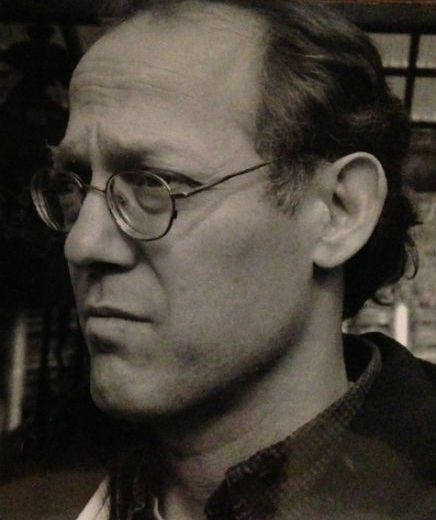

Faculty member Peter Turchi is interviewed about his newest book A Muse and a Maze by his son Reed for The Believer:

I. TRYING TO SOLVE THE PUZZLE

REED TURCHI: Well, now that I’ve cut out all of the paper polygons from the last page of A Muse and A Maze and made what looks like a duck-rabbit, should my writing have improved? In the end, should I even be trying to solve the puzzle, or enjoying my polygonic-wanderings?

PETER TURCHI: Actually solving the puzzles in the book isn’t going to improve anyone’s writing, but “trying to solve the puzzle” is one way to think about what a lot of us—writers and other artists—do every day. Step one is to recognize the problem, step two is deciding what constraints you want to impose or respect, and step three is finding a pleasing/surprising/exciting solution.

Continue reading online…
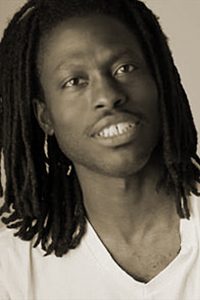
roger_rFour poems, a reading, and a Q&A by new poetry faculty member Roger Reeves appear at Blackbird:

Cross Country

When I ran, it rained niggers. Early in October—
the first creases of autumn, a flag-weary sky
in which yellow birds, in flight, slip through the breast-
bone of God and tear at the coarse threads
that keep the morning knit tightly around his heart.
What was it that they sang about the light, their tongues,
the thistles they pluck from the bitter bark
of an allthorn then thrust into the breast of whatever god
or good animal requires eating, a good piercing?

Continue reading online…

james-longenbach-448An article by faculty member James Longenbach appears at Poetry Foundation:

The medium of Giorgione’s Tempest is “oil on canvas”; the medium of Robert Rauschenberg’s Bed is “oil and pencil on pillow, quilt, and sheet.” Descriptions of a work of art’s medium seem to tell us everything and nothing, for our entire experience of art is dependent upon the artist’s intimacy with the medium, and yet the medium itself may seem weirdly mundane, especially when the artist harnesses everyday materials like a sheet. In the nineteenth century, the stuff from which art is made came to be called the medium because for hundreds of years the word had referred to something that acts as an intermediary, a piece of money or a messenger. The artistic medium enables a transaction between the artist and the world, and, over time, the history of those transactions has become inextricable from the medium as such, an inherited set of conventions. It’s not coincidental that it was also in the nineteenth century that the word medium was first used to describe a person who conducts a séance, a person who exists simultaneously in the worlds of the living and the dead.

Continue reading online…

A story by faculty member Antonya Nelson appears in The New Yorker:

“Cell-phoning?” her mother would ask her patients when they called, and Jewel found it embarrassing. “Are you cell-phoning?” her mother would demand, waving her family away, so that she could take the call in private. Her patients were what she discouraged her children from labelling “crazy.” It was her job to listen to their problems, and then her duty to never repeat what she knew to anybody else. The town was smallish; you saw everyone at the grocery store, especially on Sunday mornings. It was never a pleasure.

Continue reading online…

Faculty member Alan Shapiro will receive the 2014 North Carolina Award. This is the highest civilian honor the State of North Carolina can bestow. More information can be found online…

Faculty member Liam Callanan has written about his Percy Jackson-inspired family trip to Greece for The Wall Street Journal:

MY LUNGS were burning, my legs wobbling. My first outing as an Olympic athlete was not going well. Then again, I was burdened with a backpack and jet lag.

My 11-year-old daughter had decided that the best way to experience ancient Olympia—a sprawling riverside complex in Greece where the Olympic Games were held starting in the eighth century B.C.—was to run the roughly 200-yard track that Zeus’s son Hercules supposedly laid out. Under the scorching midday sun, was it a smart thing to do? No. Did it make antiquity come alive in a rush that I can feel again typing these words? Ye gods, yes.

Continue reading online…

An interview with faculty member Antonya Nelson appears at American Short Fiction:

Antonya Nelson’s eleventh book,Funny Once, was published this past May. It includes the story “Winter in Yalta,” which appears in the most recent issue of ASF. Over a slew of emails, she took some time to talk to me, among other things, about the origins of her love of reading, obsessive fascinations, and the difference between therapy and writing fiction.

Continue reading online…

Faculty member Megan Staffel discusses her story “Mischief” (which appears in Issue 06 of The Common) with writer and fiction alum Helen Hooper on the inaugural episode of The Common Podcast: Contributors in Conversation.

Listen online.

A new essay by faculty member A. Van Jordan appears online in Some Call It Ballin:

In a wrestling match, there are five official ways in which a wrestler scores points, but one of those ways is contingent on your opponent committing a penalty, which only leaves four ways to actually strategize for points. When it came to the official ways that I could score points, I was pretty good at all of them, but I was a master at the most important, unofficial way: I knew how to get into my opponent’s head.

Now, I say all of that not to sound like a bad ass but to paint the picture of what I faced on the mat. I would be a bad ass, for instance, if I were talking about being a college wrestler at Iowa in the ‘80s or an Olympic wrestler in Sydney in 2000, like when USA’s Rulon Gardner upset the wrestling world by defeating the undefeated Russian, Alexander Karelin, but I’m talking about 8th grade in Akron, OH.

Continue reading online.