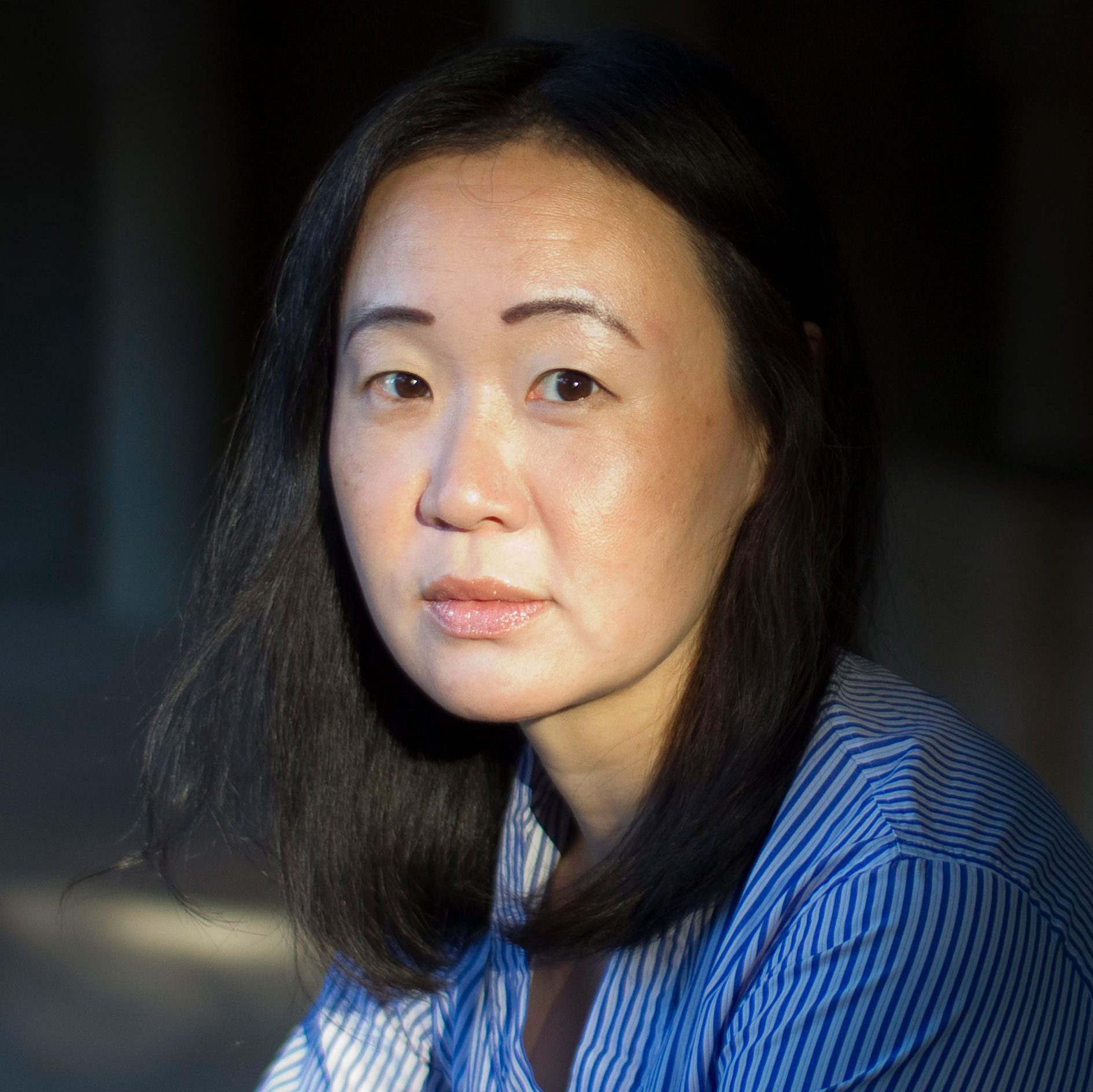

Sarah Cypher, a 2020 fiction graduate, was recently featured in the LEON Literary Review. Read an excerpt of “The Lord’s Tower Had Many Fine Rooms,” a selection from a novel-in-progress, below:
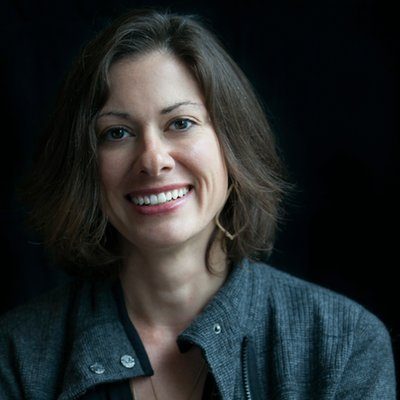
The Lord’s Tower Had Many Fine Rooms (excerpt from the novel The Skin and Its Girl)

       I met my father’s house in the scorching green heart of an Oregon summer.
       This house was a sort of enchantment. It had a gambrel roof that softened the crisp eaves and long porch. Inside, it was full of hardworking windows and honey-colored wooden floors. I’d never seen a place so clean. A weekly housekeeping service left the evidence of their work only in the absences: no crumbs, no smears, no laundry. He’d bring me back from the doctor, where people kept taking long tubes of my blood and little chips of my body, and the house’s very air would feel different, as though it had been shaken out and scrubbed; floorboards giving off an amiable gleam as though these rooms were friendly but kept forgetting who we were.
       Only his furniture was old and personal. Its walnut feet were heavy like wolf paws, and under its patina, the vanity table in my second-story bedroom had a rippling muscularity, as though it might go padding through the house at night. He decorated with the family relics, including a pair of antique cannonballs, and also gave me his mother’s crib, telling me only that the row of tiny punctures along the rail were from her teeth. He put it in my room and told me everything here was mine.
       I stood on the mattress at night, feeling the teeth marks in the wood, tracing with my fingers everything I could reach. The caulking around the bottom windowpane was whiter and rougher than the caulking around the top. This room, in other circles, had achieved a kind of fame. But it didn’t feel like the site where he and my mother had wept and shouted until she’d thrown one of the cannonballs through the glass. No, the room felt serene, even stable, like the surface of a frozen pond.
       What to make of this all-of-a-sudden father?
       He had been to medical school, before an accident that had taken his hand. We spent hundreds of cool hours in his basement office, a room that contained most of his life. The desk lamp was on ten hours at a time throughout his dim autumn workdays, spotlighting a coaster on his desk that always held a mug and drowned teabag. The only other place for adults to sit was a deep chair in the corner whose arm held an open New Yorker. His library took up all the other walls—law books and medical texts that stood in beautiful, soldierly ranks around his desk, giving off the smell of glued leather. Despite the susurration of rain and damp earth around the foundation, the air was warm and dry, incubating what felt like all the knowledge in the world.
       My mother helped often, driving down from the hill to show him what to do with the baby he’d amputated so carefully from her life. Even though the court had agreed to her petition for two days’ custody a week, she came late most evenings to help with dinner and end-of-the-day chores, in the hours when my father’s phantom left hand hurt the worst. She moved between the cutting board and steaming pan, her face a mask I’d never seen before. He sat with his wrist on the granite countertop. Propping a small mirror against the flushed skin of his left inner forearm, he stared hard at the reflection of his right hand in the mirror as it played invisible piano keys, trying to convince his brain that its sinister twin hadn’t been crushed under a falling motorcycle and removed.
       Those evenings, even though my mother never set foot beyond the living room, he always turned on the tall lamp in the basement office, the one that held the New Yorker magazine on the chairStrange, that magazine was the only item in the house that never got put away; or more truly, it was in its right place already. The fold of its binding was almost gone, and its covers were rippled and stiff with age, showing a pastel map called “New Yorkistan.” Its date was December 10, 2001, the week my mother had thrown the cannonball through the upstairs window and moved out.

Read the passage in its entirety here: http://leonliteraryreview.com/issue-5-sarah-cypher/
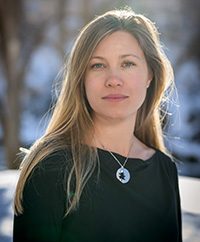
2019 fiction alum Evanthia Bromiley was recently published in the LEON Literary Review. Read an excerpt of “eviction,” a passage from a novel-in-progress, below:

eviction
an excerpt from junkyard lyric: a novel

To bed, their mother says.

But the walls of the trailer are thin and the night is sharp with broken things. Virginia and Evan stalk their scraped-empty bedroom, Virginia handstanding-up-against the wall, Evan hurling a rubber ball at the door over and over. The twins are amped. They want more noise, more smash.

To bed, their mother says from the door.

Lie with us! Lie with us, they clamor; they cling to her, her clothes her fingers, pulling her with them. They want their mother, to keep her tied to them. It is always this way. They want more of her than they can ever have, more than she can give, want her to fill them up and up, want her hands legs her big tight belly her neck where it meets her chin. When they were babies, Evan would reach for that spot and gather the skin between his fingers.

You keep that up you’re going to give me a double chin.

Jude Woods is young. Too young and too beautiful, their mother, more beautiful than all the other mothers, with her black black hair and her skin all crept over with ink. When Virginia is scared, (Virginia fears leaving, believes she might be left) when she feels night slam against the window, Evan holds her neck, there, too, at the place you find a heartbeat.

Lie with us, the twins say.

Someday, you’ll shed me like a husk.

No. Lie with us lie with us.

All right. Only for a minute.

The twins bounce into bed. Jude eases down careful because the baby. Everything stills. They play a game Virginia made up. It’s called Find Her, because the baby has a trick—she’s visible from outside, but at the same time she’s invisible, inside. She’s paddling around in there. Virginia imagines herself as a girl in a boat and the baby a fish, silver-slipping beneath them.

Readyornot? Evan shouts.

Their mother says, Shh … Ready.

Ready or not, they each slap a hand (careful, please) onto Mama’s body where the baby is, where that baby might be, and the magic is the baby answers, not just one time but every time. She’s on the other side of skin muscle water blood, but she knows they are there—We are here! thinks Virginia. We’re here.

Go!

Virginia holds her breath. Wait, she whispers. Wait—

The baby rises. All three of them feel the bulk of her, moving, choosing. Virginia squeals. Jude gasps. Evan smiles. The baby fits her tiny heel into the place Evan touches, heel to palm, half kick, half kiss. She chose you, their mother says to Evan, and kisses Virginia.

Now in the bed it’s warm and it’s good.

There is Evan’s smell, caliche, grass, and sun, and Virginia’s own smell, the one she can’t smell at all because it’s too close to her, and their mother’s, cinnamon and sour-milk. She and Evan tumble to fit, just-so, all sharp kneed-needing. 

When was the last time you two had a bath?

Uncertain, says Evan.

Last night, lies Virginia.

She takes them in, though, all their sharp angles, fingers jabbing into her warm body, and it is hard, suddenly, for Virginia to hold the secret. We’ll run away, she thinks.

Almost—but she bites the secret back. Instead she says,

Stayasec.

Actually—maybe it’s both of them, says it. Sometimes there’s confusion, her thoughts and Evan’s tangle, and she isn’t sure what’s said out loud, what’s kept thinking between them.

Staystay, Mama.

I am, Jude says, I will, I’m right here.

Don’t leave.

I’d come back.

She’s told Virginia this before: The mother always comes back.

Read “eviction” in its entirety here: http://leonliteraryreview.com/issue-5-evanthia-bromiley/

What I Did on the Moon,” a short story by fiction faculty member Dean Bakopoulos, recently appeared in the LEON Literary Review. Read an excerpt below:

Faculty member Dean Bakopoulos smiles at the camera in a blue gingham button down with a green t-shirt underneath.

What I Did on the Moon

Well, I had some drinks. I yearned for you. I dug up my father’s bones and watched them float off into the ether. I ignored my infirm mother. I engaged with various shadows. One night, I saw a light flickering flickering below me. I went to a tower I’d crafted from rocks and climbed it so I could better see the light. It was coming from my house. My children were signaling to me. I went to the special crater I use for listening. I listened. I could hear their voices like so much mewing. I whispered into the whisper-hole I made with a blow torch.
            “Are you mewing for me?” I said.
            I waited to hear their voices but they’d fallen asleep.
            I listened to their sleeping all night.
            I had memorized the sounds of their sleeping.
            I could sing along to the smell of their breaths. I knew the scores of their dreams.
            When I was without them, I found the nearest people. It’s what you do after a divorce. There are some people, you think, I’ll sit next to them. You’re healing from a fracture. People see it when you say, Hi, everybody!
            That’s what I would say, sitting down at, say, the Applebee’s bar? Hi, everybody! What are the app specials? Wow, check this out: Mega Mug of Miller! $4.99!
            The Applebee’s often closed early on the Moon. I had to find other resources to expand my circle of friends.
            On the moon, there is a swiping app that assists with this, with finding people to sit with. To sup with. Lo, I stand at the door and swipe. Swipe swipe swipe.
            One woman made me dinner. She made a pasta dish in an overly lemony sauce. I was thirty-eight and having dinner with a woman I’d just met in her cluttered dining room. I kept thinking to myself how notable it was and how her hair was piled on her head, how her earrings shimmied as she grated the parmesan. What notable earrings! They were handmade, she said. Handmade!
            By an artist!
            An artist in Santa Fe!
            It was also probably notable-feeling because I was on the moon. I was skinny that year. I ate my pasta without self-consciousness. I don’t ever want to be that skinny again. Jesus. Yes I do.
            Afterwards, I helped the woman do the dishes. She started the dishwasher and put on Sade and I went for my keys but she asked me to unzip her dress. This. Is. No. Ordinary Love. I hadn’t dated since college, so I asked for clarification.
            All the way, I asked.
            Mm-hmm, she said.
            Is this a request for practical assistance before I leave for the night, I asked, Or is this an invitation to stay?
            Mm-hmm, she said.
            I see, I said, and started to unzip the dress then stopped.
            I’m sorry, I said, if I am ruining the mood but I need clarification. I didn’t ask a yes/no question but you keep saying, mm-hmm.
            Stop talking, she said.

Read the story in its entirety here: http://leonliteraryreview.com/issue-5-dean-bakopoulos/

Andy Young, a 2011 poetry graduate, recently had a cycle of poems featured in Ice Floe Press. Read an excerpt of one of the four poems, “Pandemic Funeral: A Duplex,” below:

Pandemic Funeral: A Duplex

The day my mother’s buried,
light throws itself against the earth.

Light throws itself against the earth,
a bird against a window.

Like birds in a window,
my family’s in the screen.

My family inside a screen
for her Facebook funeral.

In a Facebook funeral,
siblings sit a pew apart.

All my siblings pulled apart.
My father’s masked and small.

My father, masked: a small
animal from this distance.

Read the entire poem cycle here: https://icefloepress.net/2020/11/19/four-poems-by-andy-young-w-3-paintings-by-moira-j-saucer/

Fiction alum Emily Sinclair was recently featured in Barren Magazine. Read an excerpt of “The Mammogram Industrial Complex” below:

The Mammogram Industrial Complex

The patient sits on the exam table. The doctor says, Seatbelt? Sunscreen? Calcium? Good, good, good. Have you had a mammogram within the last year?

Well, I changed health insurance and we moved and so

Have a mammogram. 

The patient pushes open the door to the mammography center. She sees that it shares space with a doctor’s office that employs one of her ex-husband’s best friends, a man who luxuriates in his perceived charm. The patient re-considers her appointment, but goes in anyway. There is a Keurig in the waiting room, the scent of vanilla espresso faint but distinct.

The patient states her name.

The receptionist says, I love your hair. That big messy look. Sure wish I had it.

The patient has had a stressful day. She has not showered or even really eaten, except almonds. She hands over her insurance card and license.

I’m here for a cancer screening? 

The receptionist winks, her mascaraed lashes dropping like a crow’s wing. I’d make a terrible bartenderCan’t tell how old anyone is. I’d guess you’re about thirty?

The patient is fifty-one. Her hair is greying and there are lines around her eyes and mouth. She points these things out.

Receptionist: Well, you look GREAT.

The patient ignores her, out of politeness. Why do some women find the dishonesty of flattery comforting? She looks away, like a cat.

Love your bag, the receptionist says.

*

Breast as object: The boys of the patient’s youth, trying to cop a feel. What exactly did they want? To squeeze a breast? To simply touch one? What drives the desire for this ductal network? How odd it seemed that a boy would want to suckle at her breast, like a baby. How erotic. Sex is the most inexplicable and mysterious part of any person. She Googles the first boy who ever touched her breast and he’s on YouTube saying he’s “very intentional about building a great workplace culture and then she finds an obituary for his wife, who died of a rare cancer just weeks ago.

A tech says, I’ll take you back.

To when, the patient thinks, following the tech.

She is told to remove her shirt and bra and put on a warm pink robe.

Take off your robe. Stand here, next to the machine. Lean forward. Raise your arm. Turn your head to the side. I’m going to compress the breast now. I’m sorry. Are you okay? Take a breath and hold it. Now let it go. 

On the screen are white branching ducts leading from the milk-producing lobes to the nipple. The patient does not know how to read the image. Except that there is a small solid circle among the branches.

Read the piece in its entirety here: https://barrenmagazine.com/the-mammogram-industrial-complex/

Poetry alum Caroline Mar was recently featured in the Pinwheel Journal and Vida. Read an excerpt of “遺產/a duplex” below.

遺產

a duplex

Where can I set this inheritance down?
Maybe every winter was like this, once.

I know every winter was like this, once.
The whiteness devised to draw us in.

Read the poem in its entirety here: https://pinwheeljournal.com/poets/caroline-m-mar/

Fire Sale,” by fiction alum Alyson Dutemple, recently appeared in Pithead Chapel. Read an excerpt below:

Fire Sale

We are a few months into my “honesty-only” policy when my son asks the question. “Why are bananas so cheap?”  We are in the supermarket.  He is taking notes for an elementary school project about balancing budgets, making informed family decisions.  Behind one pink ear, he has tucked a chewed pencil.  Evening is approaching and the last rays of sun pump their quiet heat through the window glass, illuminating persimmons, kumquats, other expensive exotics.  “Maybe it’s a fire sale,” I say.  Our shopping cart wobbles as I push it.   I tell him what I read about bananas dying out, about the fungal disease slowly decimating their numbers, as I steer three working wheels, and one broken one, out of the section marked “Produce.”

At the register, I hang back while my son tabulates his expenses in a notebook, places each item on the conveyer belt with care, without my assistance.  Though the cashier is uninterested in the particulars of his project, he tells her about them in great detail.  She rings up his selections with a red laser beam that recalls a television program I used to watch with my grandfather back when I was my son’s age.  Before we even knew phrases like “genetic predisposition.”  Before anyone understood all the different ways words like “heart” and “disease” could fit together.  Women in short dresses wielding astral powers, ray guns, dynamite calves.  My grandmother, in the other room, frying a chicken.

Read “Fire Sale” in its entirety here: https://pitheadchapel.com/fire-sale/

2015 poetry graduate Jennifer Sperry Steinorth recently published a graphic poem in the Cincinnati Review. Experience “Master’s Mirror” at the link below:

https://www.cincinnatireview.com/special-features/special-feature-masters-mirror-by-jennifer-sperry-steinorth/

Poetry faculty member Sandra Lim was recently featured in Zocalo Public Square. Read an excerpt of “Spinoza Says” below:

Spinoza Says

He who loves God
cannot endeavor that God
loves him in return.

Do you know,
I think the cool silver
of this is hard to live by.

When there is anything
you want very much,
you are making up a story

all of the time,
of how you will get it
and how it will be.

You want the love of God
and the human sort. A big treasure
and a little treasure.

I wonder if you’re like me,
a touch affronted by your own
underlying avidity.

Read the poem in its entirety here: https://www.zocalopublicsquare.org/2020/11/20/sandra-lim-spinoza-says-poem/chronicles/poetry/

Elizabeth T. Gray, Jr., a 2009 poetry graduate, was recently interviewed for Music and Literature. Read an excerpt below:

Your Salient is a book of poetry about the Third Battle of Ypres in World War I, a battle that is also called Passchendaele. Do you think of it as epic poetry? Or is it part lyric? If any part of it is epic, what are you singing—what is your theme? 

I never thought about genre before or during the writing of it. Nor retrospectively. Let me think… There are lyric moments. Formally, it can be read as a sequence of lyrics, although I think of it as a single poem. It was very hard to pull out individual poems for a submission or a reading. But it’s not an epic. It’s not narrative, there are no named heroes. The war itself—courtesy of the machine gun and the artillery barrage—broke any lingering ideas of heroic conquest. No imaginable Achilles thereafter. One could say that there are elements of epic that have been picked out and used differently. It deals with a war. It alludes to examples of individual and collective courage. And, of course, as in the Mahabharata and the Iliad, it turns out there are gods hanging around in theatre. But if I had to tick a box, I would choose threnody, a song for the dead. A sub-genre under lyric, I think. Maybe this is a monody for The Missing, who, for the duration of the song, may be present, and safe within its confines. But there’s another layer, the speaker’s quest. Whoever she is. Her effort to see without quite knowing what that means as she wanders around between the lines in this temporal and geographical No Man’s Land.

You can read the interview in its entirety here: https://www.musicandliterature.org/features/2020/11/8/a-conversation-with-elizabeth-t-gray-jr